The Myth of Rest
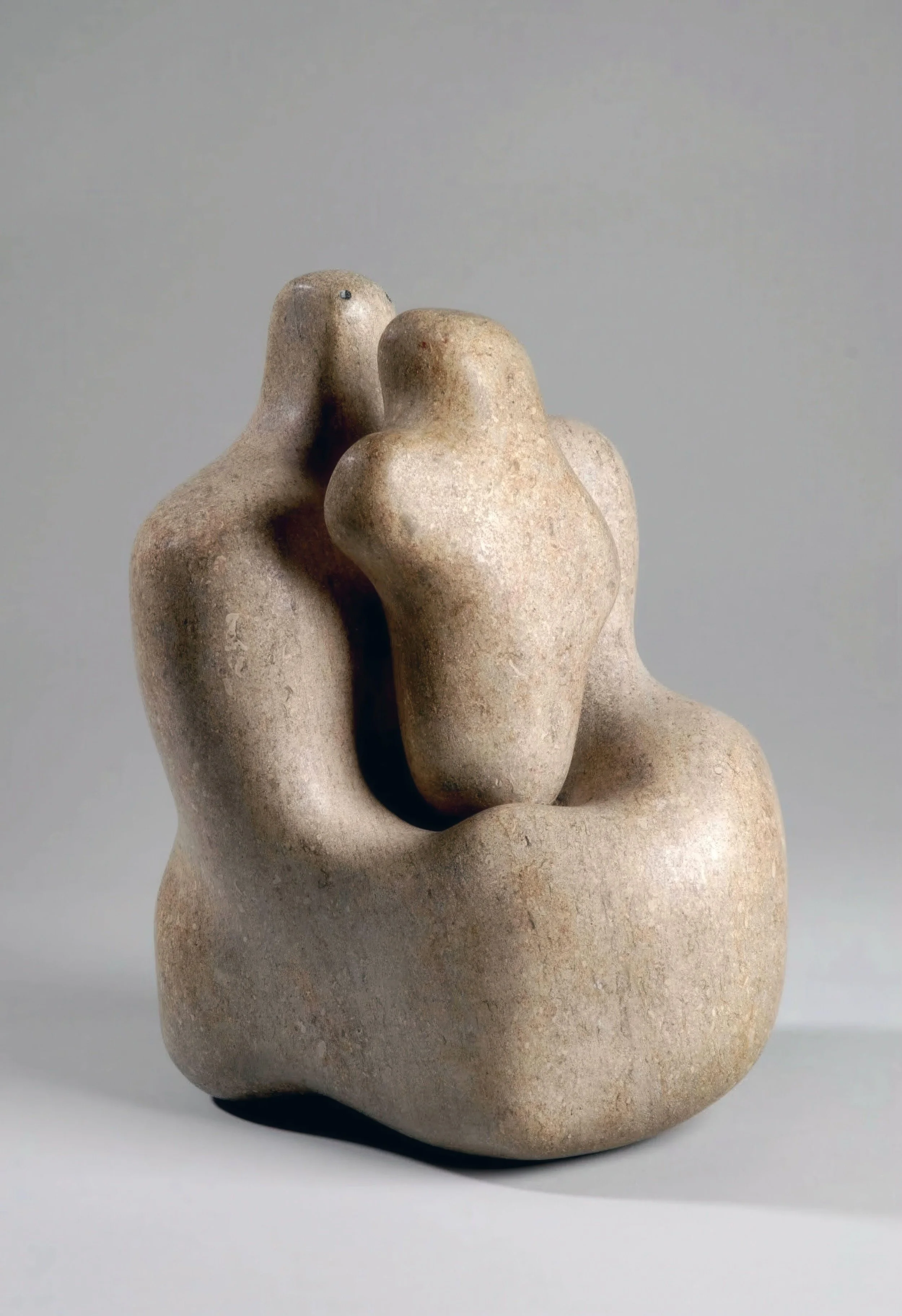
Treating the body as a machine is a form of self-objectification
I wanted to write about rest. But every time I answered the call to make it prescriptive, as a trainer would be expected to do, it felt disingenuous. Lists of hacks, optimization strategies, routines to “earn” recovery: it’s all out there. None of it rang true.
So I wrote this instead: not a solution or a guide on “how to rest more,” but an inquiry into what rest actually is—and a refusal of the myth that rest is a reward.
This myth keeps us trapped in shame and performance, but the body does not operate according to these systems of social control, even if they “work” on a logical level or produce compliant citizens. The need for rest is a form of testimony—a signal that bodies offer whether a culture is ready to hear it or not.
Across our cultural landscapes, rest is framed as something to be earned only after proving our effort, discipline, or devotion. Once you start looking for this script, it appears everywhere.
the modern arena
In fitness culture, fatigue is routinely framed as failure. Clients apologize for being tired. They override their bodies’ signals to prove commitment to their “goals.” Rest becomes an indulgence—something to minimize, skip, or out-supplement entirely, because: gains.
Trainers themselves walk a difficult line: holding the map to where the client wants to go in one hand, while holding the reality of how she actually feels in the other, trying to stay accountable to both.
Meanwhile, the backdrop of mainstream gym culture insists on a singular narrative—that fatigue is a kind of moral apathy (or atrophy even), and that discipline means pushing through to constantly “perform” your fitness, commitment, and self-discipline. An industry term is born: athletic performance.
But fatigue is not your body betraying your mind.
Pain is not “weakness leaving the body.”
It is data. It is testimony.
where the myth begins
The story begins far earlier than the gym floor.
In childhood classrooms, fatigue is rarely treated as meaningful, self-understanding information. Compliance is praised. Depending on where in the world you live, preschool/kindergarten might look like a little factory where you learn to sit in a chair and “work”. How the institution sees you is centered. Bribes, distraction, and other methods—both covert and overt—become standard tools to maintain quiet productivity.
We learn quickly.
What we learn early in these environments is to systematically override our own signals. We learn to equate human worth with measurable output. We learn to distrust the quiet, protective messages of fatigue, boredom, and overwhelm. This constant resistance takes immense metabolic energy. It also cultivates the highly adaptive skill of dissociation.
We don’t leave those lessons behind in childhood. They follow us directly into adulthood—into our workplaces, into our workouts, and into the exact ways we speak to ourselves.
School is merely the initial on-boarding. Our jobs, our gyms, and even our private ambitions continue the training. Each generation receives, interprets, and passes down a slightly different variation of these signals.
We take it from there.
the industrialized calling
For so many xennials and millennials, this preparation took a new, more deceptive form: the promise that if you found your calling—if you did what you loved—your absolute devotion would eventually be rewarded.
Give yourself fully to the work. Pour your energy into your passion. Trust that the rest will follow.
What’s “the rest”? Everything else that a hardworking and devoted person might want or need? Literal rest included? And if the rest ever came, who among us would know how to take it? How many of us feel that we’ve “made it”?
Instead, what often comes is systemic exhaustion, financial precarity, and the quiet shame of wondering whether you somehow failed destiny or missed the actual point.
The myth of the calling does not liberate us from the productivity trap—it perfects it. If the work itself is framed as sacred, then resting (stopping when you’re tired, taking a year off, or finding peace with life on life’s terms) begins to feel like a betrayal. We may achieve milestones, but still feel like we are waiting for something abstract that was earnable. We share a collective weariness.
Scanning the horizon front and back as we do in midlife, we can begin to see the clues to where it all began. One of those clues lies deep inside Western thought itself.
the deeper split
Part of the reason this myth remains so incredibly durable is philosophical.
Western culture still carries the distinct echoes of Descartes’ old dualism: the body as a machine, the mind as its operator. In this rigid frame, rest becomes purely mechanical—a recharge, a fuel stop, a necessary maintenance task scheduled after expending energy.
We know intellectually that this isn’t true, and yet many of us still live as if our bodies were factory machines—governing the timing, quantity, and quality of our rest entirely by our output. It’s not even all under our control: it can be employer expectations, “grind culture”, or watching the colleague ten years younger than you, responsible for only themselves, set some kind of standard for how everyone else is clocking hours.
And yet. Countercultural currents have always existed—the exact current this essay swims in. Feminist thinkers, among others, have long challenged this mind–body split, insisting that fatigue, care, and bodily limits are not weaknesses, but fundamental truths fundamental to the human condition that are worth listening to.
When the body is understood as an active subject rather than an inanimate object, rest becomes audible in a new way—not as an indulgence, but as testimony. It is the language of a body that refuses to be treated as an object.
It is the signal of a partner asking to be heard.
If parity is ever to be achieved in our society, it begins here. Not with gender. The mind and the body must move through life with completely equal authority, esteem, and recognition. Without that, every other promise of balance remains purely rhetorical.
This is the prenup we must sign if we intend to remain culturally wedded to the Cartesian split.
the math of caregiving
And yet, knowing all of this does not make resting easier. In caregiving, rest often becomes impossible in ways that philosophy alone cannot resolve.
The math becomes painfully concrete.
The first shower in three weeks, taken while the baby cries. Clean hair on one side of the equation; the pain—his and mine—of letting him cry on the other.
A spontaneous Sunday nap with the toddler while the preschooler watches four continuous hours of Paw Patrol. Then the inevitable chaser: letting the preschooler nap too late so I can work against a deadline, knowing tomorrow’s fatigue will cascade into trouble for him at school.
Cereal for dinner for the third time that week so I can skip cooking and cleaning and shut the whole circus down at eight instead of ten, to maybe sleep enough and have time for my own breakfast in the morning.
These fascinatingly precise math problems cannot be viewed as indulgences of an anachronistic worldview or old habits that a “better mom” would have changed by now. They are transactional survival choices, carved out of impossible equations where someone always pays.
Motherhood in these moments begins to resemble a kind of chronological chiaroscuro—light and shadow layered across the hours of a single day. What appears from the outside as ordinary domestic routine is, from within, an ornate negotiation of complementary needs: nourishment, rest, safety, patience, time.
The baroque quality of it lies in the density. Nothing is simple or in a vacuum. Every decision is a response that reflects back and echoes forward into the next hour, the next day. It behaves more like a Möbius strip: continuous, inseparable, looping back on itself. Strength and rest, subject and object, self and child collapse into one flowing surface.
caregiving makes self and other impossible to compartmentalize
It is the fluid and osmotic give-and-take of a single organism, where resources are constantly pulled across the membrane to effectively sustain the whole system.
Naming this, witnessing its ornate and often ugly detail, refuses the silence that treats caregivers’ exhaustion as invisible, expected, self-inflicted, or deserved.
“Taking rest,” as it’s said in Spanish, is an insistence on the porousness of the membrane. Therein, even compromised rest remains testimony—a mutualistic exchange of speaking and listening, however imperfectly, but consciously and intentionally both across and within the self and the other. The body continues to give and receive through all of this, even when we are too tired to answer well.
the same script in fitness
We come back to fitness culture, where the same impossibility appears again when rest is viewed as weakness—something surrendered to rather than chosen with wisdom. As if it were something you yield to because you lack the stamina to keep going. The setting changes, but the script remains the same: exhaustion proves virtue, and rest must be justified either intellectually or through sheer lack of choice.
For those of us who coach bodies for a living, this is not just theoretical. It is ethical. Because physiologically, the body tells the same story again and again: adaptation happens in recovery.
Muscles grow not in the lift but in the pauses between reps, sets, and workouts. Nervous systems regulate there. Strength consolidates there. Safety and trust grow there too. Rest is not “not doing.” It is something that can—and should—be practiced with the same attention and intention as if it were part of the training itself.
toward a different relationship
When we approach both training and daily life relationally, effort and recovery begin to move together like legs walking a path. Each step requires the other. One leg moving back allows the other to swing forward.
The question shifts. Instead of asking, Did I earn this rest? we begin to hone interest in something far more honest:
What is being communicated right now?
Is this a reciprocal partnership?
Is the pendulum swinging with equal force in both directions?
The faster we abandon the moral calculus of worthiness, the closer we come to personal sovereignty.
In this place, you do not owe your existence, your output, or your identity to the systems that taught you to dissociate.
Your body stops being an instrument to drive, and finally becomes a place to live.
Barroco Press Catalog:
Rest Architect Field Guide: Timed Recovery in Strength Training (Strength Training Field Guides, Vol. 1) — PDF volume with its companion, Rest Architect Pocket Guide [$12].
Training Strategy Review — Bespoke training audit and structured strategy blueprint. Delivered asynchronously as a comprehensive PDF [$325].
Image: Barbara Hepworth, Mother and Child, 1934. The Hepworth Wakefield / Alamy Stock Photo.